
Best Front Door Materials for Modern UK Homes
- 3 September 2026|
- News
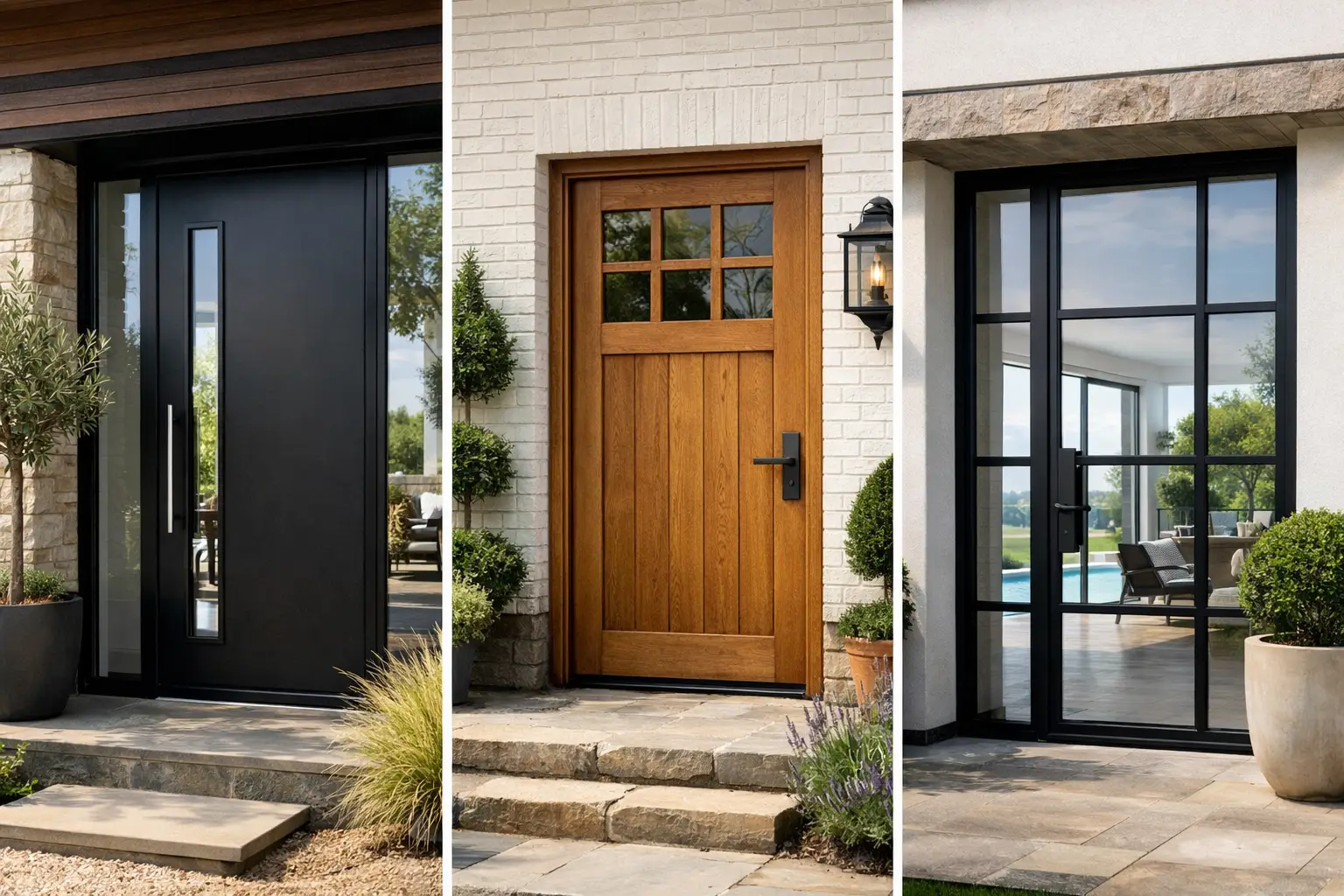
A front door has a tougher job than most parts of a home. It needs to make the right first impression, keep out wind and rain, support reliable security and work with the character of the property. The best front door materials are not the same for every house: a Victorian terrace in St Albans, a contemporary extension in Radlett and a new-build in Harrow will each call for a different balance of appearance, performance and budget.
The sensible starting point is not simply choosing a colour or a style. Consider how exposed the entrance is, whether the door sits beneath a porch, how much maintenance you are comfortable with, and whether you are matching existing windows or creating a deliberate contrast. A well-specified door should feel solid, close smoothly and perform reliably for years.
What makes a good front door material?
Material affects almost every part of a front-door decision, from the depth of the frame and range of finishes to insulation, security options and long-term upkeep. However, the door slab alone does not determine quality. The frame, hinges, glazing, threshold, locking system and installation all matter just as much.
For most homeowners, the key considerations are thermal performance, weather resistance, security, maintenance, design flexibility and cost. It is also worth thinking about the wider elevation. A beautiful timber door can suit a period home perfectly, while slim aluminium or steel may better complement large glazed areas and clean architectural lines.
The best front door materials compared
Composite doors: the practical all-rounder
For many UK homes, a premium composite door offers the strongest all-round combination of appearance, insulation, security and low maintenance. Rather than being made from one material, composite doors use a layered construction, commonly with a reinforced core, durable outer skin and insulated centre. This helps create a substantial door that resists everyday knocks and performs well through changing weather.
Composite doors are available in traditional, cottage and contemporary designs, with convincing woodgrain finishes as well as smooth painted effects. They are particularly popular for replacement projects where homeowners want the warmth of a classic door without the regular maintenance associated with natural timber.
Quality varies considerably between systems, so the detail matters. Look beyond the brochure image and ask about the locking cylinder, hinge security, frame reinforcement, weather seals and glazing specification. A well-made composite door can be an excellent choice for detached homes, family houses and properties exposed to the elements.
Timber doors: character that improves with the right care
Nothing quite matches the natural depth, grain and individuality of timber. For listed buildings, period properties and homes where authenticity matters, a bespoke timber front door can be the most appropriate option. It can be shaped, panelled and detailed to reflect original joinery, making it especially valuable in conservation-led renovations.
Modern engineered timber doors are far more stable than older solid-wood constructions, and high-quality factory finishes provide valuable protection. Even so, timber needs commitment. Its coating should be inspected regularly, particularly on south-facing or exposed elevations, and refreshed when necessary to prevent moisture getting into the surface.
That maintenance is not a drawback for everyone. Many homeowners see it as part of owning a natural material that can be repaired and renewed rather than replaced. If your priority is architectural character and a genuinely bespoke result, timber remains one of the best front door materials available.
Aluminium doors: crisp, durable and contemporary
Aluminium entrance doors are a natural fit for modern homes, extensions and renovations with aluminium windows, sliding doors or rooflights. They offer clean sightlines, sharp detailing and a wide choice of durable powder-coated colours. Dark greys, blacks and textured finishes remain popular, but aluminium can also be specified in more individual shades to suit the building.
Because aluminium is strong, it can support larger door sizes and bold contemporary designs without looking bulky. Thermally broken profiles and insulated panels help reduce heat loss, while the powder-coated finish requires very little upkeep beyond routine cleaning.
Aluminium is usually a higher initial investment than uPVC and many composite doors. It is best chosen when the design language of the home justifies it, or when you want a particularly tailored entrance with features such as side screens, oversized glazing or a pivot-style appearance. Not every aluminium door is equally insulated, so compare whole-door performance rather than relying on claims about the frame alone.
Steel doors: exceptional strength and a distinctive finish
Steel is often selected for architectural impact. Its strength allows very slim profiles around glazed sections, making it ideal for striking entrance screens, heritage-inspired designs and high-end contemporary schemes. Internally, steel doors can create elegant room divisions; externally, purpose-designed steel entrance doors can deliver an imposing, precise look.
For security-led projects, specialist steel entrance doors can offer advanced locking, reinforced construction and high levels of resistance to forced entry. Some systems can be specified with motorised locks, smart access options and enhanced security classifications, depending on the product and application.
Steel is not a one-size-fits-all answer. It is generally a premium choice, and external systems must be properly designed with thermal breaks and suitable weather protection. For a luxury renovation, a wide entrance opening or a property where security is a central concern, it can be an outstanding material. For a straightforward like-for-like replacement, a composite or aluminium door may offer better value.
uPVC doors: affordable and low-maintenance
uPVC front doors remain a practical option for homeowners looking for an economical, low-maintenance replacement. They do not rot, need painting or require much more than occasional cleaning. Modern systems offer improved reinforcement, better glazing choices and more attractive finishes than older white plastic doors.
The trade-off is usually in the level of design refinement and the sense of weight compared with premium composite, aluminium, timber or steel options. A carefully specified uPVC door can still provide dependable thermal performance and security, particularly for a rental property, secondary entrance or budget-conscious refurbishment.
If kerb appeal is the main driver, it is worth comparing a quality uPVC door with a premium composite door in person. The difference in detailing, depth and finish may be worthwhile on the principal entrance of a home.
Security and insulation: look beyond the door material
A secure front door is a complete system. Multi-point locking, anti-snap or high-security cylinders, reinforced keeps, secure hinges and correctly fitted frames all contribute to performance. Glass panels should use suitable safety glass, and the design should avoid creating easy leverage points around the lock or frame.
Where required or desired, choose a door tested to recognised security standards such as PAS 24. This can be particularly relevant for new-build work, major refurbishments and homeowners who want greater reassurance. Smart locking can also be useful, but it should complement strong mechanical security rather than replace it.
Thermal performance deserves the same attention. Ask for the complete door U-value, which reflects the performance of the door and frame together. A well-sealed, accurately installed door helps prevent draughts around the entrance, but a low figure on paper will not compensate for poor surveying or installation.
Matching the door to your property
There is rarely one universal winner when choosing the best front door materials. Composite is often the best balance for a traditional or suburban family home. Timber is hard to beat for period authenticity. Aluminium works beautifully in contemporary schemes, while steel is suited to statement architecture and enhanced-security requirements. uPVC has a place where budget and simple upkeep are the priorities.
Before ordering, look at real samples in daylight, not only on a screen. Check how the proposed colour works against brickwork, render, paving and window frames. Consider practical details too: the direction the door opens, access for pushchairs or deliveries, the amount of light needed in the hallway and whether a side panel would improve the entrance.
At E&A Windows, the right recommendation begins with the property and the people using it, not a hard sales pitch. A careful survey and clear discussion of the available materials will help you choose a front door that feels right every time you come home.