
Door Security: What Protects Your Home Best
- 15 September 2026|
- News
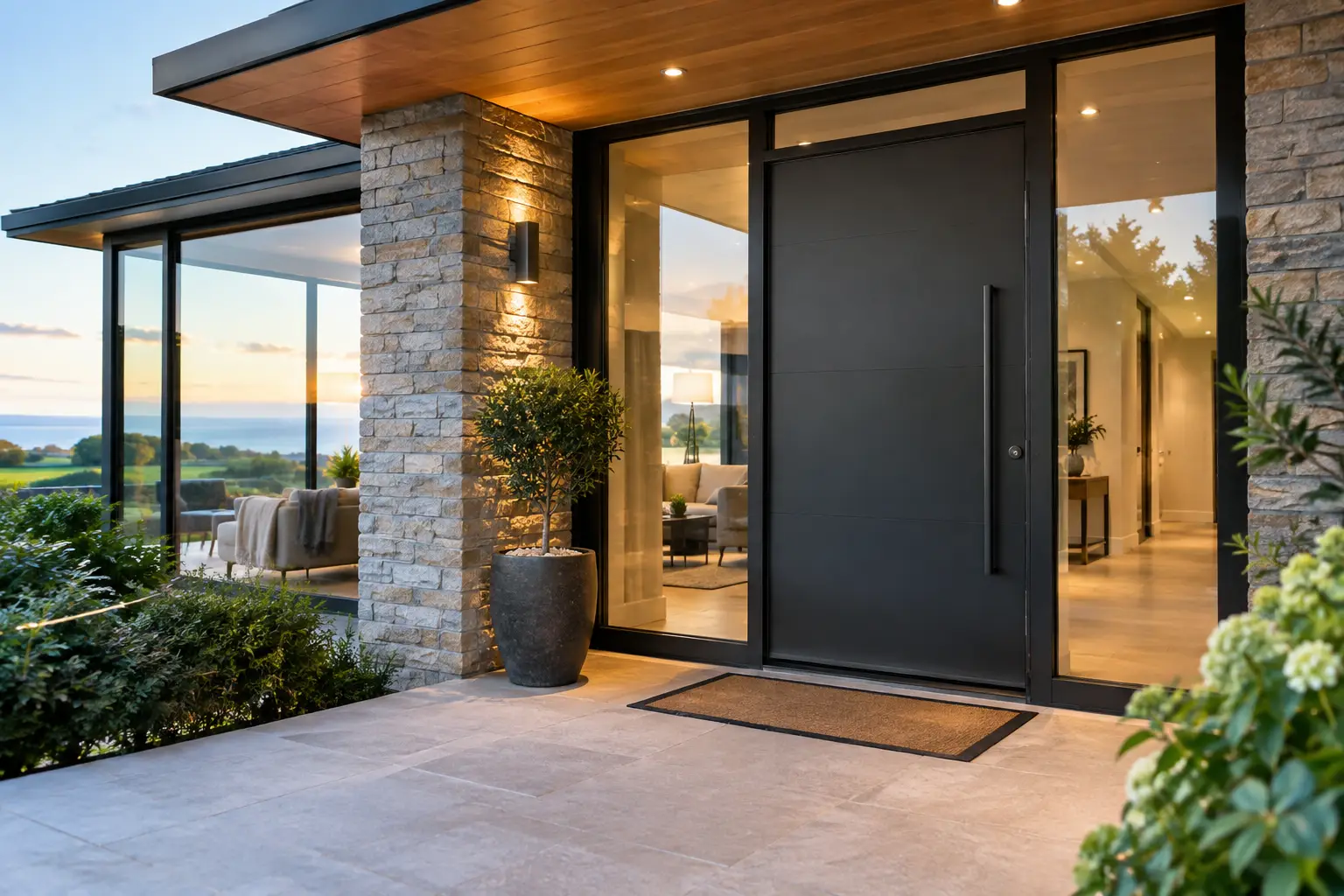
A front door can look substantial yet still leave weak points around the lock, hinges, frame or glazing. Effective door security is not about fitting the most complicated lock available. It is about choosing a complete, properly specified door set that suits your property, then having it surveyed and installed with care.
For homeowners across Hertfordshire and North London, this often becomes a priority during a renovation, extension or replacement door project. A new entrance door is a visible investment in kerb appeal, warmth and everyday comfort, but it should also provide genuine peace of mind for years to come.
Door security starts with the whole door set
It is tempting to compare doors by their locking mechanism alone. In practice, a lock can only perform as well as the door slab, frame, hinges, keeps and fixings around it. If one part is poorly fitted or unsuitable for the opening, the overall result is compromised.
A quality replacement door should be measured precisely for the existing opening and installed so that the frame is secure, square and properly fixed to the structure. The lock keeps must align accurately, the door should close without force, and there should be no excessive movement at the hinge side or latch edge. These details may not be obvious from the pavement, but they matter every day.
Material also has a role to play. Composite entrance doors are a popular choice for homes because they combine a solid feel with excellent insulation and a broad choice of traditional and contemporary designs. Aluminium and steel entrance doors can offer crisp modern detailing, strength and larger design possibilities. Timber remains a beautiful option for period properties when it is well made, finished and maintained. There is no single best material for every home – the right choice depends on the architecture, exposure, budget and level of security required.
Choose locks that work together
Most modern external doors use a multi-point locking system. When engaged, it secures the door at several points along the frame rather than relying on one central latch. Depending on the system, these points may include hooks, rollers, bolts or mushroom cams. The benefit is not simply added resistance to forced entry; it also helps pull the door evenly against its seals for a tighter close.
The cylinder remains an important consideration on doors with euro-profile locks. A suitable high-security cylinder should be selected to resist common methods of attack, including snapping, drilling and picking. It should also be the correct length for the door and furniture. A cylinder that projects noticeably beyond the handle can be vulnerable, while one that is too short may be difficult to use.
Lock furniture is part of the system too. A well-designed security handle or escutcheon can shield the cylinder and reduce access to it. On composite, aluminium and uPVC doors, the lock, cylinder, handle and multi-point mechanism should be specified as compatible components rather than chosen in isolation.
For a principal entrance, homeowners may also consider smart locking. Keyless entry, app control, fingerprint recognition and motorised locks can be useful, particularly for busy households or managed properties. However, smart features should never be treated as a substitute for a secure physical door, reliable locking hardware and professional installation. It is worth considering how the system is powered, who can access it and what happens if a battery needs replacing.
Look for relevant tested standards
Security ratings can make product comparisons clearer, provided they are understood in context. PAS 24 is a recognised UK standard for enhanced security performance in doors and windows. RC classifications, commonly used on higher-security systems, indicate resistance against defined forms of attempted forced entry.
These standards can be especially relevant for new-build developments, architectural projects, insurance requirements or homes with a higher risk profile. They do not mean that every property needs the highest possible specification. A well-designed door with a suitable tested rating, fitted correctly to the building, is generally a better decision than an over-specified product installed without the same attention to detail.
Do not overlook frames, hinges and glazing
The hinge side is often forgotten when people think about securing a door. External hinges should be durable, correctly adjusted and, where appropriate, incorporate security features that resist the door being lifted or forced from the frame. Outward-opening doors need particular consideration because their hinges are exposed.
The frame must be strong enough for the door and securely connected to the surrounding structure. This is particularly important in older homes, where original openings may be uneven, or in extensions where the door sits within a wider glazed screen. A careful survey identifies these conditions before manufacture, avoiding unsuitable assumptions on site.
Glazed panels and sidelights can bring welcome daylight into a hallway, but they need the same considered specification as the door itself. Toughened or laminated safety glass may be appropriate depending on its location and the design. Laminated glass can retain its integrity after impact, making it a sensible option where additional security is desired. The arrangement of the glass also matters: a letterplate, thumbturn or internal handle should not be easily reached through a broken pane.
Letterplates deserve a closer look as well. A secure letterplate should limit access to the internal lock area and be fitted carefully. In some designs, moving the letterplate to a side panel, or using an external post box, can allow greater freedom in the door design and reduce a potential weak point.
Security should fit the way you live
A secure front entrance needs to remain practical. If you regularly carry shopping, collect children from school or manage deliveries, a door that is awkward to lock properly will not provide the reassurance it should. Ask how the locking operation works from inside and outside, whether the key can be removed only in the locked position, and how visitors will be managed.
For rear and side entrances, do not assume a less visible door needs less protection. Garden doors, French doors and sliding or bifold doors may be out of sight from the road, making strong hardware, anti-lift measures and secure glazing equally worthwhile. Large glazed doors can be exceptionally secure when they are designed as complete systems and fitted correctly.
A layered approach also makes sense. External lighting, a clear view of access points, sensible key management and a maintained alarm or camera system can support the physical protection offered by the door. Avoid hiding spare keys near the entrance, and replace lost keys or cylinders promptly when there is any doubt about who may have access.
Why professional surveying and installation matter
Even an excellent door can disappoint if it is not installed to the right tolerances. Poor alignment can make multi-point locks difficult to operate, place stress on mechanisms and create gaps that affect weather performance. Over time, movement in a building, heavy daily use or changes in temperature can reveal shortcomings that were avoidable at the survey stage.
An experienced installer will assess the opening, the condition of the surrounding brickwork or structure, threshold levels, drainage and any access requirements before the door is ordered. They will also discuss practical choices such as opening direction, glazing positions, handles and locking options. This is where honest advice is particularly valuable: a door should suit the property rather than follow a one-size-fits-all specification.
At E&A Windows, this attention to detail runs from the initial conversation through survey, installation and aftercare. The aim is not to add unnecessary features, but to specify a door that looks right, performs reliably and gives the homeowner confidence in its security.
Maintain your entrance door for lasting protection
Security hardware benefits from routine care. Keep tracks, thresholds and locking points free from grit and debris, especially on patio and sliding doors. Clean and lubricate moving parts only with products recommended for the system, as unsuitable oils can attract dirt or affect finishes.
If a key starts sticking, the handle needs lifting harder than usual, or the door no longer closes cleanly, do not ignore it. Small adjustments made early can prevent wear to the lock and preserve the way the door engages with the frame. After severe weather, building work or settlement around an extension, it is also sensible to check that the door remains correctly aligned.
The most reassuring entrance is one that feels effortless to use: a door that closes cleanly, locks positively, complements the home and has been chosen with care. That combination of thoughtful specification and precise installation is what turns a replacement door into lasting protection.