
Steel Versus Aluminium Doors for Your Home
- 11 September 2026|
- News
A door opening is rarely just a door opening. It may frame a garden view, divide a loft conversion from a landing, bring light into a dark hallway or set the character of an entire extension. When considering steel versus aluminium doors, the best choice comes down to more than appearance. Sightlines, insulation, configuration, budget and the existing property all deserve proper consideration.
Both materials can create beautifully made, secure doors with slim frames and generous glazing. Yet they do different jobs particularly well. Steel has an unmistakable architectural presence and exceptionally fine profiles, while aluminium offers enormous design flexibility, strong thermal performance and value across larger openings. The right answer depends on where the door sits and how you want it to perform over many years.
Steel versus aluminium doors: the key difference
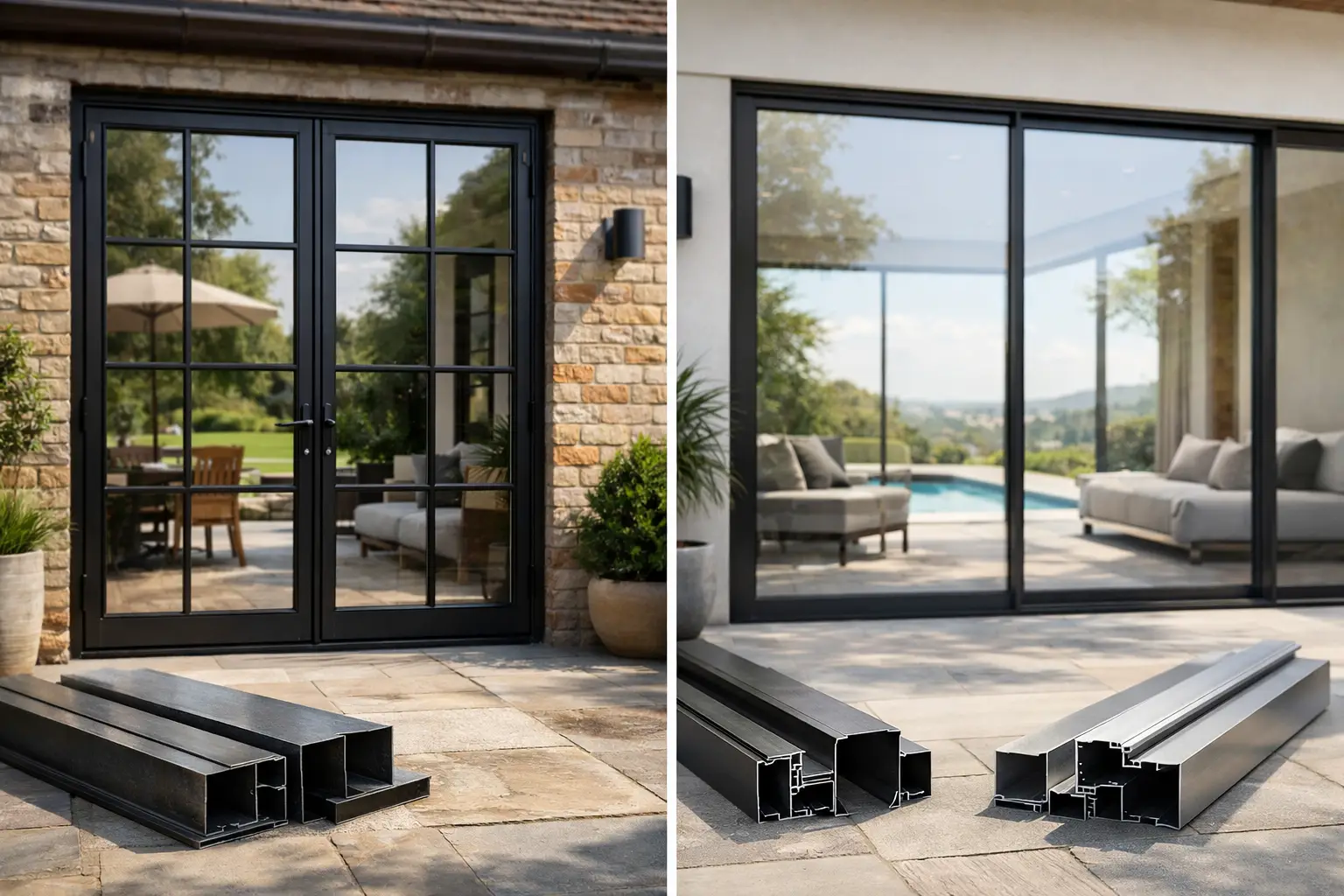
Steel is exceptionally strong for its profile size. This allows manufacturers to create very slender frames, narrow glazing bars and refined grid layouts without making the door feel heavy or visually cluttered. It is often the material of choice where a genuine heritage look, industrial-style detailing or a distinctive internal feature is the priority.
Aluminium is also strong, lightweight and highly versatile. Its frames are generally a little deeper or wider than comparable steel profiles, but modern slimline aluminium systems still achieve elegant sightlines. They can also be engineered into a wider range of door styles, including bifolds, large sliding doors, French doors, single entrance doors and shaped or oversized glazed screens.
For many Hertfordshire homes, the decision becomes clearer once the location is defined. Internal doors often suit steel particularly well. For external openings, aluminium is frequently the practical choice, especially where thermal performance, wide spans and everyday garden access are central to the brief.
Appearance and character
The appeal of steel doors
Steel doors bring definition to an opening. Their fine frames can create crisp black grids, soft heritage-style divisions or a more understated glazed screen in a colour chosen to complement the interior. They work particularly well in Victorian and Edwardian renovations, converted outbuildings, kitchen extensions and homes where traditional architecture meets contemporary finishes.
An internal steel door or screen can separate a kitchen and reception room without losing light or visual connection. It can also provide a practical acoustic and cooking barrier while retaining the open feel many homeowners want. The narrow framework is the point: it looks purposeful rather than bulky.
For external use, steel offers a premium, architectural finish that is difficult to imitate exactly. It is a strong option for carefully detailed renovations, statement French doors and conservation-sensitive projects, subject to the chosen system and planning requirements.
The flexibility of aluminium doors
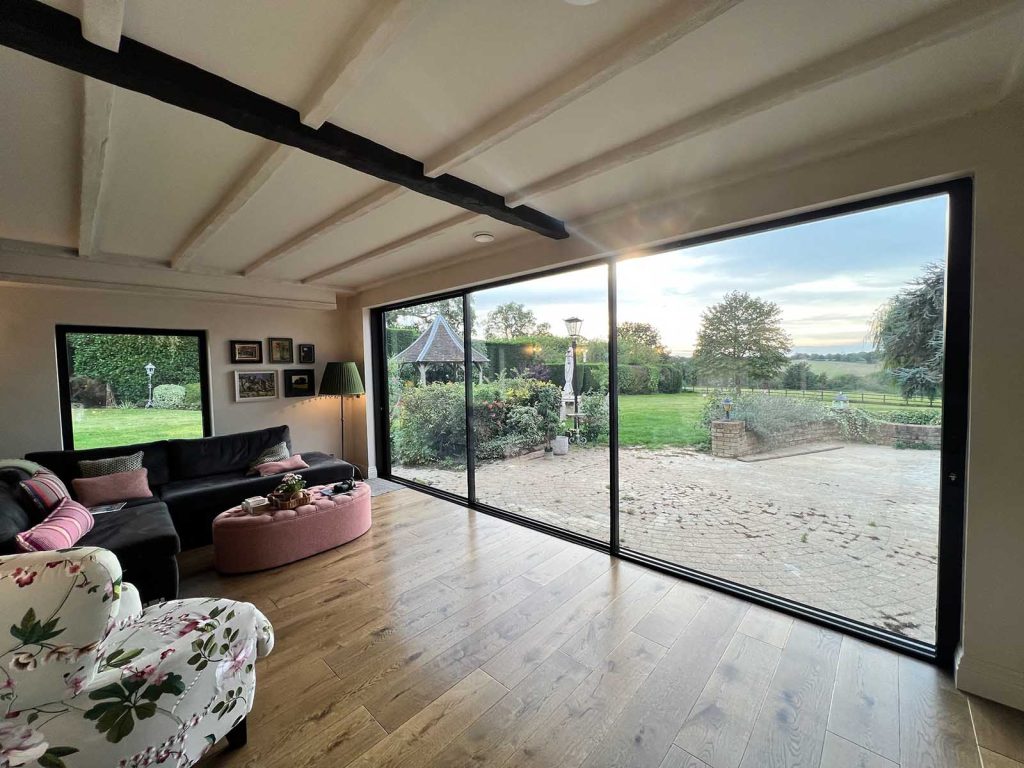
Aluminium doors can look minimal and contemporary, but they are not limited to one style. Slimline aluminium French doors can suit period homes, while heritage aluminium systems offer a steel-inspired appearance with more accessible thermal performance. For a modern extension in St Albans, Radlett or Harpenden, aluminium sliding doors can create broad glazed elevations with fewer interruptions to the view.
Aluminium is available in a wide choice of durable powder-coated colours, including textured, metallic and dual-colour finishes. This allows the exterior to coordinate with windows, brickwork and roof details while the interior can suit a calmer, more considered scheme. It is a useful advantage for whole-house projects where consistency matters.
Thermal performance and comfort
If the door leads outside, insulation should be part of the decision from the outset. Aluminium door systems are normally designed with a thermal break: an insulating barrier within the frame that reduces heat transfer between the inside and outside faces. Combined with appropriate double or triple glazing, this can provide very good thermal performance and help reduce cold spots near the opening.
Steel is naturally more conductive than aluminium, so the quality of the steel system matters greatly. Older steel doors and basic profiles may not offer the insulation expected in a modern renovation. Contemporary thermally broken steel systems are available and can perform well, but they are usually a more specialist and higher-cost solution.
Glazing has an equally important role. The glass specification, spacer bars, seals, door threshold and installation detailing all influence warmth, condensation risk and comfort. A low U-value on a brochure is only useful when the full installed door set has been designed and fitted correctly.
For an unheated internal partition, thermal performance is less relevant. This is one reason steel is such a popular choice between rooms. For a south-facing rear extension or an exposed opening to the garden, aluminium often provides the most balanced combination of slim looks and practical insulation.
Security, strength and daily use
Neither steel nor aluminium should be judged by material alone when it comes to security. A secure external door relies on the complete specification: reinforced frame sections, quality hinges, multipoint locking, cylinder protection, safety glazing and a precise installation. Doors should be selected to suit the level of security required, whether that is a family home, a flat entrance or a commercial setting.
Steel has an inherent reputation for strength, and rightly so. It is particularly well suited to specialist entrance doors and applications requiring higher levels of protection. However, a well-engineered aluminium door with appropriate locks and glazing can also provide excellent residential security. Relevant testing and certification, such as PAS 24 where required, give more useful assurance than claims based on frame material alone.
Think about the door’s use as well. A kitchen door that opens to the patio several times a day needs smooth operation, a comfortable handle height and a threshold that works for children, guests and anyone with reduced mobility. Larger sliding doors need carefully chosen track systems and correctly specified glass weights. Good surveying prevents a beautiful door becoming awkward to live with.
Cost: where the real differences lie
Steel doors usually cost more than aluminium doors of a similar size. The material, fabrication methods, specialist finishes and finer profiles all contribute to the price. If the signature slim steel appearance is central to the design, that investment can be justified, particularly in a high-quality renovation or character property.
Aluminium generally offers a wider range of price points and configurations. It can be an efficient choice for larger glazed openings, bifold doors and sliding doors, where steel may be impractical or disproportionately expensive. Heritage aluminium can also provide much of the slim, divided-light aesthetic at a lower cost than genuine steel, although it will not replicate every detail of a steel system.
It is worth comparing like for like. Two quotations may appear similar but differ in glazing, ironmongery, locking, threshold detail, colour finish, installation scope and aftercare. A clear quotation should set out what is included so there are no unwelcome surprises later in the project.
Maintenance and long-term value
Both materials are low maintenance when specified well. Aluminium has a durable powder-coated surface that usually needs only gentle cleaning with water and a mild detergent. Steel doors need similarly straightforward care, but it is sensible to inspect the finish periodically, particularly on external doors exposed to weather, and deal with chips or damage promptly.
The environment matters. Coastal exposure, shaded areas, hard water staining and poor drainage can affect any external door over time. Proper flashing, sealing and threshold drainage are as valuable as the frame finish itself. Choosing an experienced installer helps protect the long-term performance of the whole opening, not just the door leaf.
When steel is the better choice
Steel is often the stronger design choice for internal glazed partitions, finely detailed French doors, restoration projects and homeowners who want authentic slim profiles. It is also well suited to feature doors where the framework is intended to be seen as part of the architecture rather than minimised.
Choose a thermally broken steel system for external use where the design demands genuine steel and the budget allows. This approach can be especially effective on carefully considered period renovations, but it should be planned early, as profile sizes, glazing options and structural interfaces may affect the wider build.
When aluminium is the better choice
Aluminium is usually the more adaptable option for energy-efficient external doors, wide openings and contemporary extensions. It performs particularly well for sliding patio doors, bifolds and large French door sets, where smooth operation, weather resistance and insulation are all priorities.
It is also a sensible choice when matching new doors with aluminium windows, rooflights or architectural glazing elsewhere in the home. A coordinated system can give a renovation a calm, consistent finish without forcing every opening into the same style.
Start with the opening, not the material
Before choosing steel or aluminium, consider the building, the size of the aperture, how the door will be used and the view you want to preserve. For listed buildings or homes in conservation areas, early checks on planning expectations are also worthwhile. A sympathetic design may be as important as the product specification.
At E&A Windows, we help homeowners, architects and builders assess these details through practical advice, a careful survey and clear product options, without hard sales. The most successful doors are not simply the slimmest or the most expensive. They are the ones that suit the property, feel right every day and continue to perform long after the work is finished.