
Are flush sash windows suitable for period properties?
- 7 September 2026|
- News
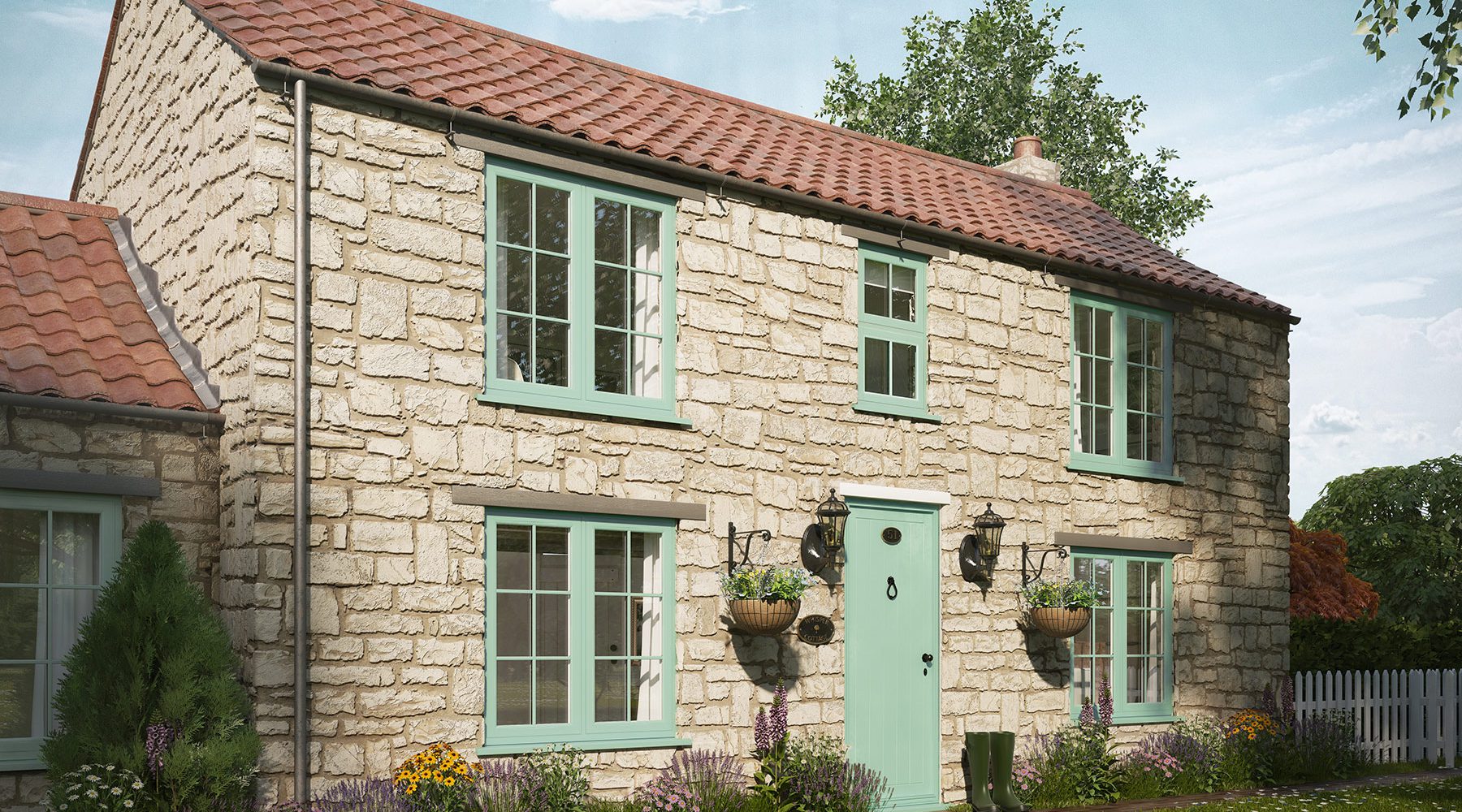
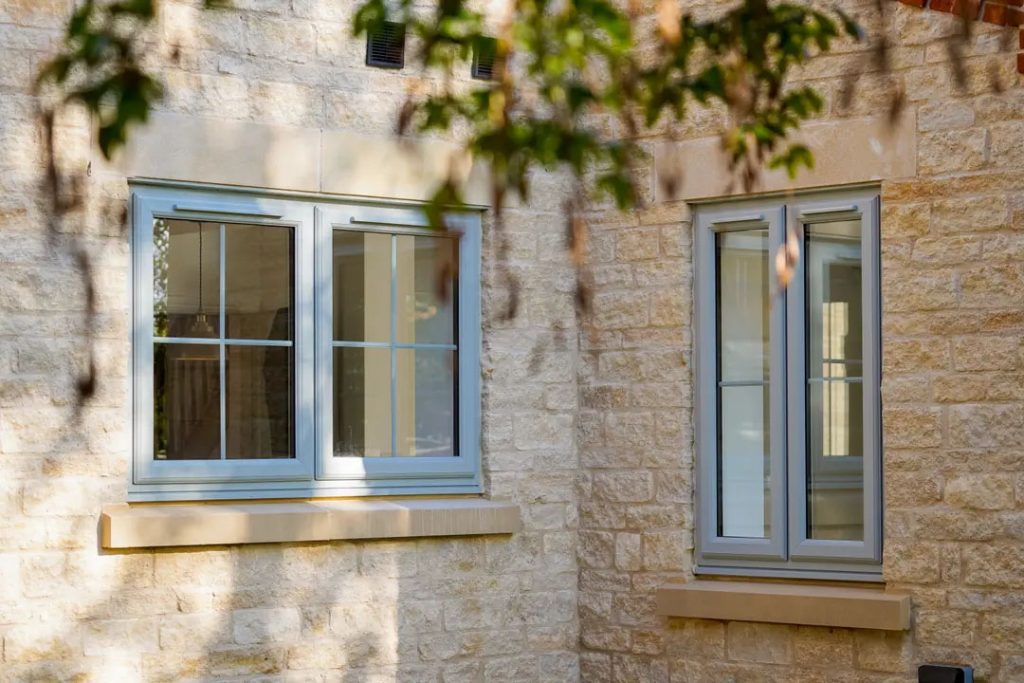
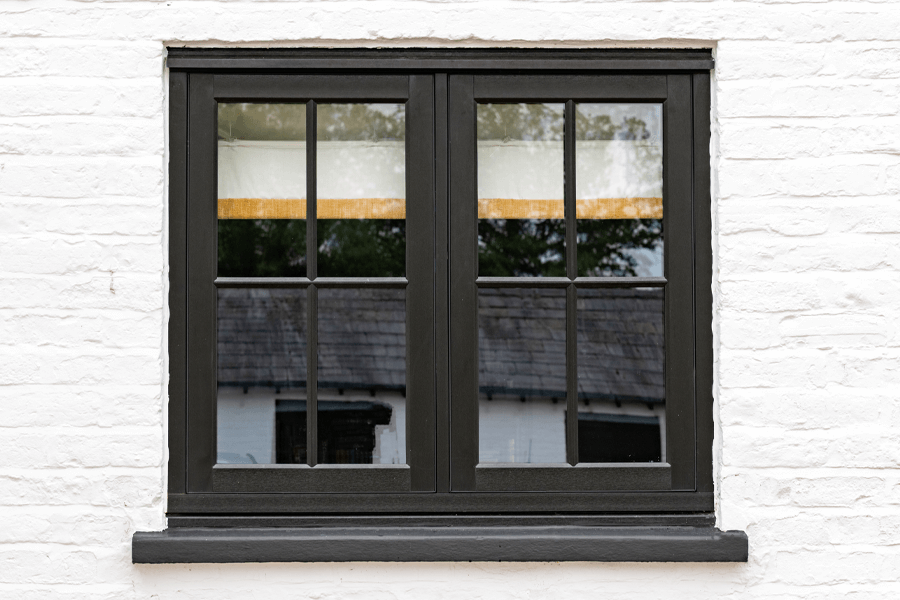
Yes – flush sash windows are one of the most sympathetic replacements you can choose for a period home. Their flush profile closely mirrors how original timber joinery was actually built on Georgian, Victorian and Edwardian properties. Rather than projecting forward from the frame, the sash sits level with it, which is exactly how these windows looked on the day they were first fitted.
If you’re already sold on the idea, take a look at our flush casement windows or get a free quote. If you’d rather understand the reasoning first, here’s what actually matters.
What makes the flush profile right for older homes?
A standard stormproof casement sits proud of its frame, projecting forward by a centimetre or so. On a modern new-build, that barely registers. On a brick-built period property, though, that small step creates a shadow line running around every window, and it’s exactly the kind of detail that gives away a replacement.
A flush sash does the opposite. It sits within the frame, completely level on the outside face, and it isn’t a modern trick dressed up to look old, either. Original timber windows on period homes were built this way because that’s simply how the joinery worked at the time – the sash and the frame formed one continuous flat plane, with none of the visual clutter a projecting casement introduces. Matching that geometry is what lets a modern replacement sit naturally on the elevation, rather than reading as an obvious later addition.
Get that part right and the rest tends to fall into place. Pair the flush profile with the correct glazing bars, proper sash horns and a woodgrain colour finish that suits the property, and the result can be genuinely hard to distinguish from the original when viewed from the street.
Do they work across different property eras?
| Property era | Original style | Flush sash compatibility |
| Georgian (1714–1837) | 6-over-6 vertical sliding sash, flush with brickwork | Excellent |
| Victorian (1837–1901) | Sliding sash, larger panes, bay fronts | Very good |
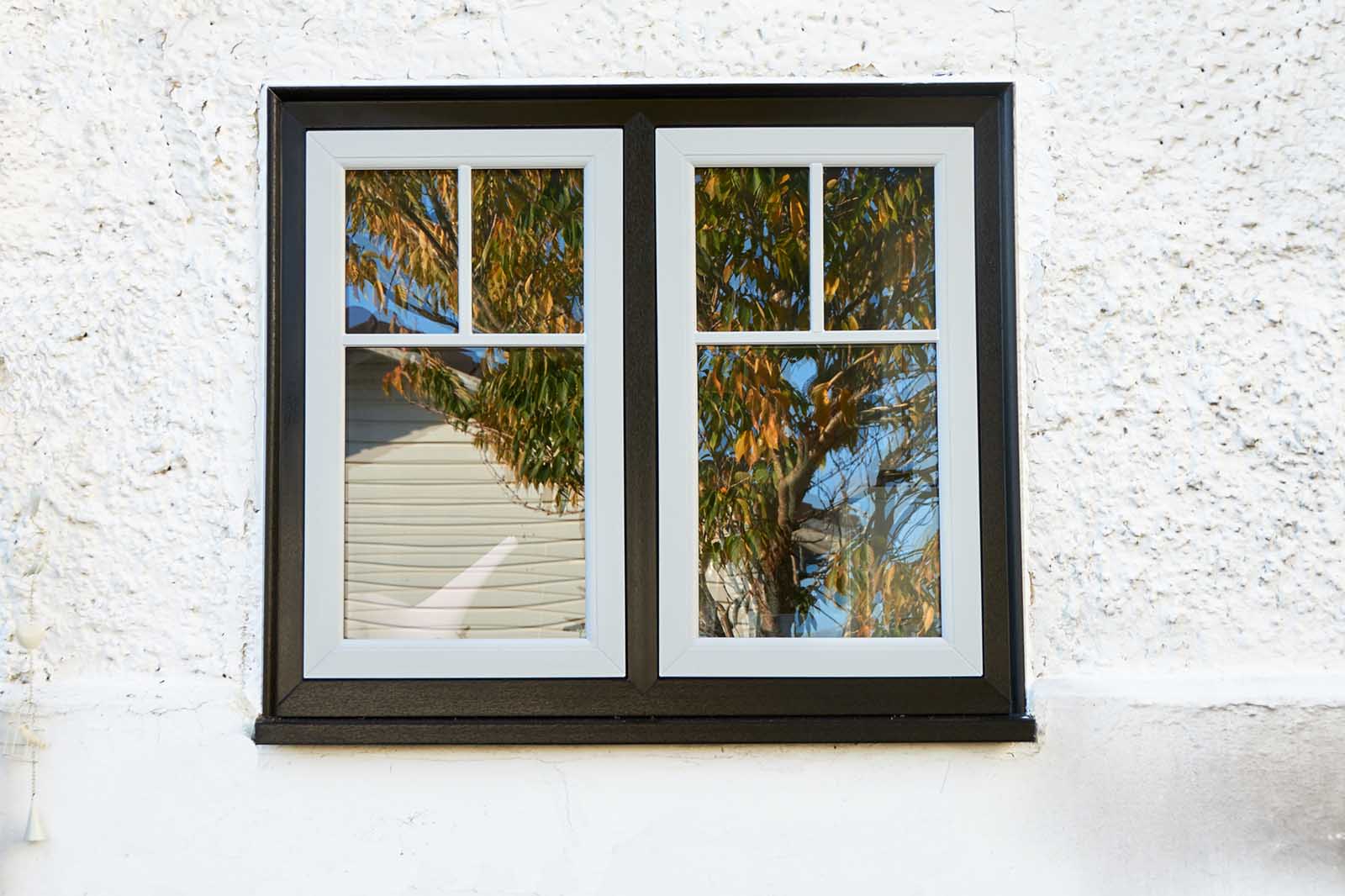
| Edwardian (1901–1914) | Casement becoming common, simpler bars | Good – flush casement directly echoes original form |
The profile itself is only ever part of the picture, though. Proportions, glazing bar configuration and colour all play into whether a replacement reads as sympathetic or slightly off – it’s the combination that convinces the eye, not any single element on its own.
Our Timberlook range is designed around exactly this kind of period detail, replicating the depth and surface character of painted timber without the maintenance that comes with the real thing.
Are flush sash windows accepted in conservation areas and listed buildings?
In many cases, yes. For homes outside a conservation area, like-for-like replacement typically falls under permitted development, so you shouldn’t need planning permission at all. Once your property sits within a designated conservation area, though, an Article 4 direction can remove that right, and a planning application may suddenly be needed for something that would otherwise be routine.
Listed buildings are a different matter again. Any external alteration requires Listed Building Consent, and what planning officers actually assess is visual compatibility, not material choice. A well-specified flush sash in heritage uPVC has been accepted by planning authorities across London on plenty of occasions, provided the proportions and detailing are genuinely appropriate for the property.
Our advice is always the same: check with your local authority’s conservation officer before you order anything. We can advise on specifications that tend to perform well in heritage applications across North London and Hertfordshire, having worked through this process with homeowners many times before.
What materials work best for period homes in London?
Timber-effect uPVC is the practical choice for most period homeowners, and for good reason. Systems like Timberlook replicate timber’s surface texture and colour depth, meet current energy ratings, and never need painting. The timber-effect window range includes classic wood grains alongside heritage shades such as Chartwell Green and Irish Oak, colours you’ll recognise from period streets right across the capital.
Aluminium suits architect-led projects and extensions connecting to older buildings rather better than it suits a straight sash replacement. Its crisp, powder-coated sightlines work well in the right context, but it can lack the surface warmth that a woodgrain uPVC brings to a traditional street elevation.
Timber retains the greatest authenticity of the three, and it may be specified where a Grade I or Grade II* listed building leaves no other option. The trade-off is cost: timber carries by far the highest long-term maintenance bill of the materials on offer.
How does modern performance compare to the original windows?
Original single-glazed sash windows were never built with insulation in mind, and it shows. Typical U-values sit around 4.5–5.0 W/m²K, which by today’s standards is poor. Modern double-glazed flush sash windows bring that down to roughly 1.2–1.4 W/m²K, and triple-glazed options can push it below 0.8 W/m²K. Translate that into real terms and it’s a meaningful reduction in heat loss across the coldest months of the year.
Security has moved on just as much as thermal performance. Multi-point locking systems and internally beaded glazing mean glass can’t be removed from outside, which was never true of the originals. Acoustic performance improves too, and that’s particularly relevant if your home sits on one of London’s busier roads, where the original draughty frames let in a surprising amount of traffic noise.
Flush sash or sliding sash – which suits your home?
A sliding sash moves vertically within the frame, and it’s the defining style of Georgian and Victorian London’s formal street fronts. If your home originally had vertical sliders, replacing like-for-like is usually the clearest path forward – there’s rarely a good reason to move away from what was there in the first place.
A flush sash, by contrast, is hinged and opens outward, but its face sits flush when closed. It suits Edwardian properties, cottages and any home where the original windows were casement rather than sliding to begin with.
E&A Windows supply and install flush sash and flush casement windows across North London and Hertfordshire. We also supply a full range of doors to complement your new windows, from composite entrance doors to aluminium bi-folds.
FENSA approved, Trustmark and CPA accredited, with our own installation teams on every job.
Call us on 01923 964000 (Radlett) or 01727 222522 (St Albans), or contact us online.