
What Is PAS 24 for Windows and Doors in Your Home
- 7 September 2026|
- News
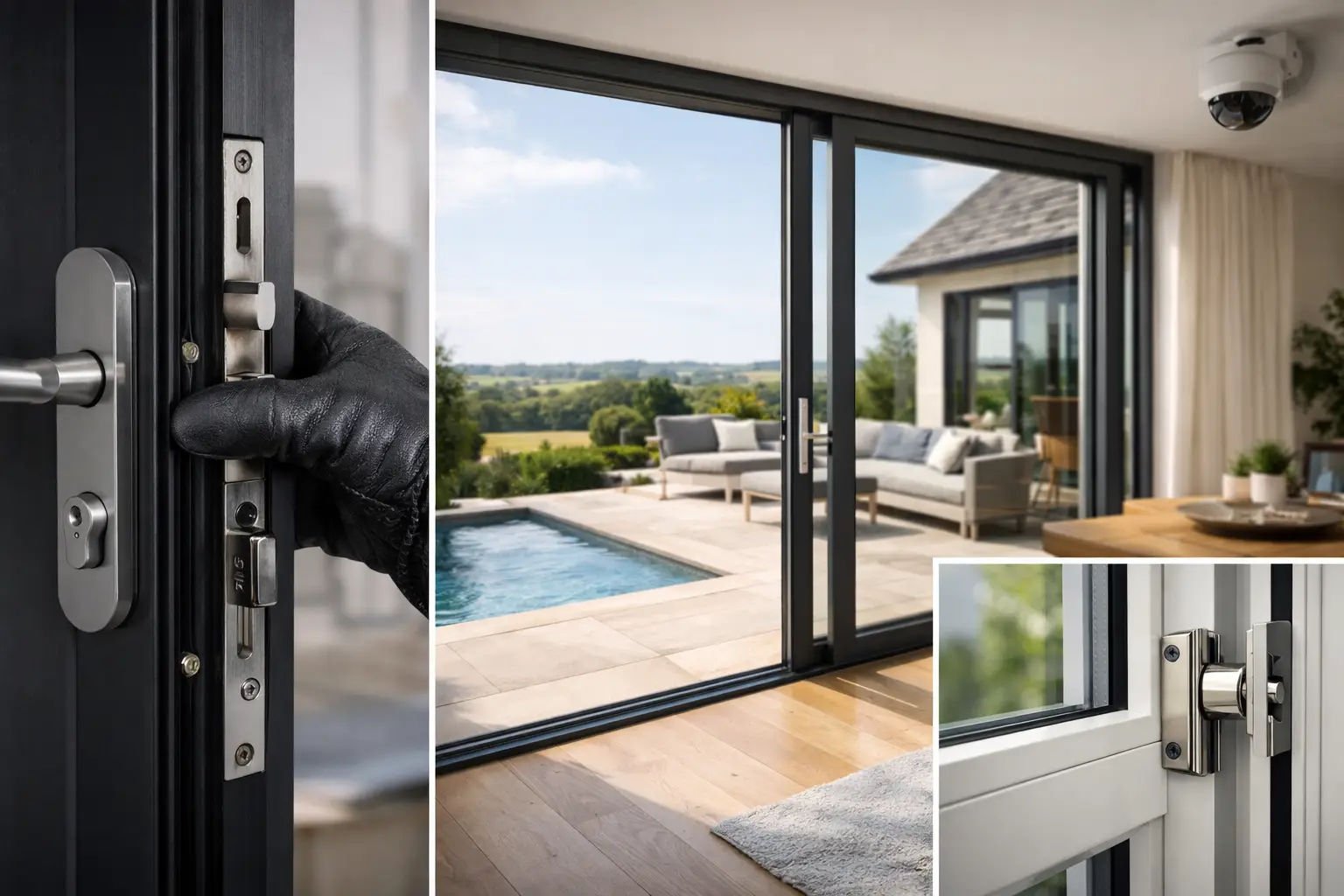
A beautiful new front door should make a strong first impression, but it also needs to stand up to an attempted break-in. So, what is PAS 24? It is a UK security standard that assesses whether a complete window or door set can resist common methods of forced entry. For homeowners, it is one of the clearest signs that security has been properly considered rather than added as an afterthought.
PAS 24 is particularly relevant when choosing entrance doors, patio doors, ground-floor windows and accessible roof glazing. It can also be a requirement on certain new-build projects. However, the label only has real value when the product has been correctly specified, manufactured and installed.
What is PAS 24 and what does it test?
PAS 24 stands for Publicly Available Specification 24. It is a performance standard published by the British Standards Institution, developed to help assess the security of doorsets and windowsets used in UK homes.
The key word here is system. PAS 24 does not simply approve a lock, a handle, a glass unit or a frame in isolation. A tested product is an assembled window or door in a particular configuration, with its specified glazing, hinges, locking points, hardware and fixings working together.
During testing, the product is exposed to physical attacks intended to reflect opportunistic burglary techniques. Test methods can involve force applied to locks and hinges, attempts to prise open opening sashes, impacts against vulnerable areas and attacks using hand tools. The product must remain secure for the required test duration and resist the means of entry set out in the standard.
It is not a promise that no criminal could ever gain access to a property. Given enough time, noise and specialist equipment, almost any physical barrier can be overcome. PAS 24 is designed to raise the level of resistance against the sort of quick, forceful attack a burglar may attempt when they want to avoid attention.
Why PAS 24 matters when replacing windows and doors
Security is rarely determined by one feature. A multi-point lock is valuable, but its performance depends on the strength of the frame, the engagement of the locking points, the hinges, the cylinder, the glass and the way the product is fixed into the building. PAS 24 looks at this broader picture.
For a homeowner, that can make product comparisons more meaningful. Two doors may look similar in a showroom, both have smart-looking handles and both claim to offer high security. Yet one may be a tested PAS 24 doorset, while the other may use individual security components without having been tested in that exact combination.
This is especially worth considering for front doors and rear doors, where accessibility makes them a natural focus. It also matters for bifold doors, sliding patio doors and French doors opening onto gardens, as well as easily reached windows at the front, side or rear of a home. On larger renovation projects, specifying PAS 24 products can create a consistent security standard across the property.
There is a practical value beyond peace of mind, too. A well-specified secure door or window can support the quality and long-term value of an improvement project. For architects, builders and developers, it also provides a clear benchmark to include within a specification, rather than relying on vague descriptions such as ‘high-security’.
PAS 24, Building Regulations and Secured by Design
PAS 24 is often discussed alongside Part Q of the Building Regulations in England. Part Q covers security for new dwellings and applies in defined circumstances, including readily accessible doors and windows. In many relevant projects, a PAS 24-tested product is commonly used as evidence that the security requirement has been met.
The exact requirements depend on the project, the building type and the location of each opening. A replacement front door on an existing home is not the same situation as a door specified for a new-build dwelling. If you are building an extension, converting a property or working on a new development, it is sensible to establish the security requirements early, before products are ordered.
PAS 24 is also different from Secured by Design. Secured by Design is a police-backed initiative that promotes crime prevention through good design. It may require or recognise products that meet PAS 24, but the two terms are not interchangeable. PAS 24 is the test standard; Secured by Design is a wider accreditation and specification approach.
Similarly, a product described as ‘security tested’ is not automatically PAS 24 compliant. Ask for confirmation of the exact standard achieved and ensure it applies to the style, size and configuration you are considering.
What PAS 24 does not tell you
A PAS 24 rating is a strong starting point, but it should not be the only factor in your decision. It does not tell you whether a door suits the character of a period home in St Albans, whether slimline aluminium sightlines will meet your design brief, or whether a glazing system will provide the thermal performance you expect.
It also does not replace careful installation. A high-performing doorset can be compromised by poor surveying, unsuitable structural openings or inadequate fixing. Correct alignment is particularly important with sliding and bifold doors, where locking and weather performance rely on precise installation.
For entrance doors, consider the cylinder and locking arrangement as well as the PAS 24 certification. Some premium steel entrance doors can combine PAS 24 performance with RC-rated security, motorised locking and smart access options such as fingerprint entry. These features may suit a high-value renovation, but they are not necessary for every home. The best choice depends on the property, budget, daily use and the level of security you want.
How to compare PAS 24 windows and doors properly
When speaking to a supplier, avoid accepting a general claim that a range is ‘PAS 24 available’. That may be true, but not every product type, opening style, size, threshold option or glazing specification will necessarily carry the same certification.
Ask whether the exact proposed window or doorset is PAS 24 tested or certified, and whether its hardware and glazing match the approved specification. This is particularly important where you are choosing oversized panels, unusually shaped glazing, sidelights, fanlights or bespoke architectural details.
It is also worth discussing the practical security features that you will use every day. For example, a front door may need a suitable cylinder, a secure letterplate position and a clear locking routine. Ground-floor windows can benefit from lockable handles, while larger glazed doors need secure locking without making the operation awkward for the household.
A good survey should look beyond the product itself. The surrounding wall construction, existing opening, drainage, threshold level and internal finishes can all affect how a new window or door is fitted. This is where experienced advice makes a difference: security, appearance, insulation and ease of use need to work together rather than compete.
Is PAS 24 worth choosing for your home?
For most homeowners replacing an accessible external door or window, PAS 24 is well worth considering. It provides reassurance that the complete product has been assessed against a recognised security benchmark, rather than relying solely on marketing claims or a long list of individual features.
That said, the right specification is not always the most expensive one. A discreet heritage-style aluminium window, a traditional timber casement or a premium composite door can all be selected with security in mind, provided the proposed system meets the needs of the property. For listed buildings and sensitive period renovations, achieving the right visual detail may be as important as choosing the security certification, and the options should be assessed together.
For new-builds, extensions and projects where Building Regulations approval is involved, PAS 24 may be a more direct requirement. For existing homes, it is usually a sensible quality and security benchmark rather than a legal obligation. Your insurer may have its own conditions, so check these separately if security upgrades form part of a policy requirement.
If you are planning new windows or doors, bring PAS 24 into the conversation at the first survey rather than treating it as a final add-on. The right product can protect your home, complement its design and give you confidence every time you close the door behind you.