
Steel Door Review for Modern and Period Homes
- 23 September 2026|
- News
A front door has a demanding job. It needs to make the right first impression, stand up to daily use and unpredictable British weather, and provide meaningful security without making the entrance feel heavy or unwelcoming. For homeowners considering a premium replacement, this steel door review looks beyond the impressive appearance to assess where steel works best, what to specify and whether it represents good long-term value.
Steel doors are not a one-size-fits-all product. A slim-framed glazed steel door for an internal room or garden connection is very different from a high-security steel entrance door. Both can look exceptional, but they serve different purposes and should be assessed accordingly.
What makes a steel door different?
Steel is exceptionally strong, which allows a door manufacturer to create slim sightlines while maintaining the rigidity needed for large panels and glazing. This is the appeal of steel-framed doors: the narrow profiles create a refined grid effect that suits warehouse-inspired interiors, contemporary extensions and carefully restored period homes.
For an external entrance door, steel offers a different kind of advantage. A purpose-designed security steel door can incorporate reinforced construction, multi-point or motorised locking, high-performance seals and insulated cores. The result is a solid, substantial entrance that can be finished in a wide choice of colours, textures and panel designs.
The important distinction is specification. A decorative internal steel-style screen should not be treated as an external security door, and a high-security entrance door may not deliver the delicate, highly glazed look associated with heritage steel doors. The right choice starts with how and where the door will be used.
Steel door review: the benefits that matter
Strong security credentials
A properly specified external steel door is among the strongest entrance-door options available. Steel has natural resistance to impact and forced entry, while premium systems can be built around independently tested security standards such as PAS 24 and recognised RC ratings. Some specialist doors are also available with more advanced security options where a project calls for them.
Security does not depend on the door leaf alone. The frame, hinges, cylinder, lock case, fixing method and installation all matter. A strong door in a poorly prepared opening is not a strong overall solution. This is why an accurate survey and experienced installation are central to performance, rather than an afterthought.
For homeowners who want convenient access as well as protection, smart locking can be a useful addition. Options may include keypad, fingerprint, app-controlled or facial-recognition access, depending on the system. These features are particularly appealing for busy family homes and properties with regular visitors, but they should be chosen for practical use rather than novelty. A straightforward key override and clear support arrangements remain sensible requirements.
A distinctive architectural finish
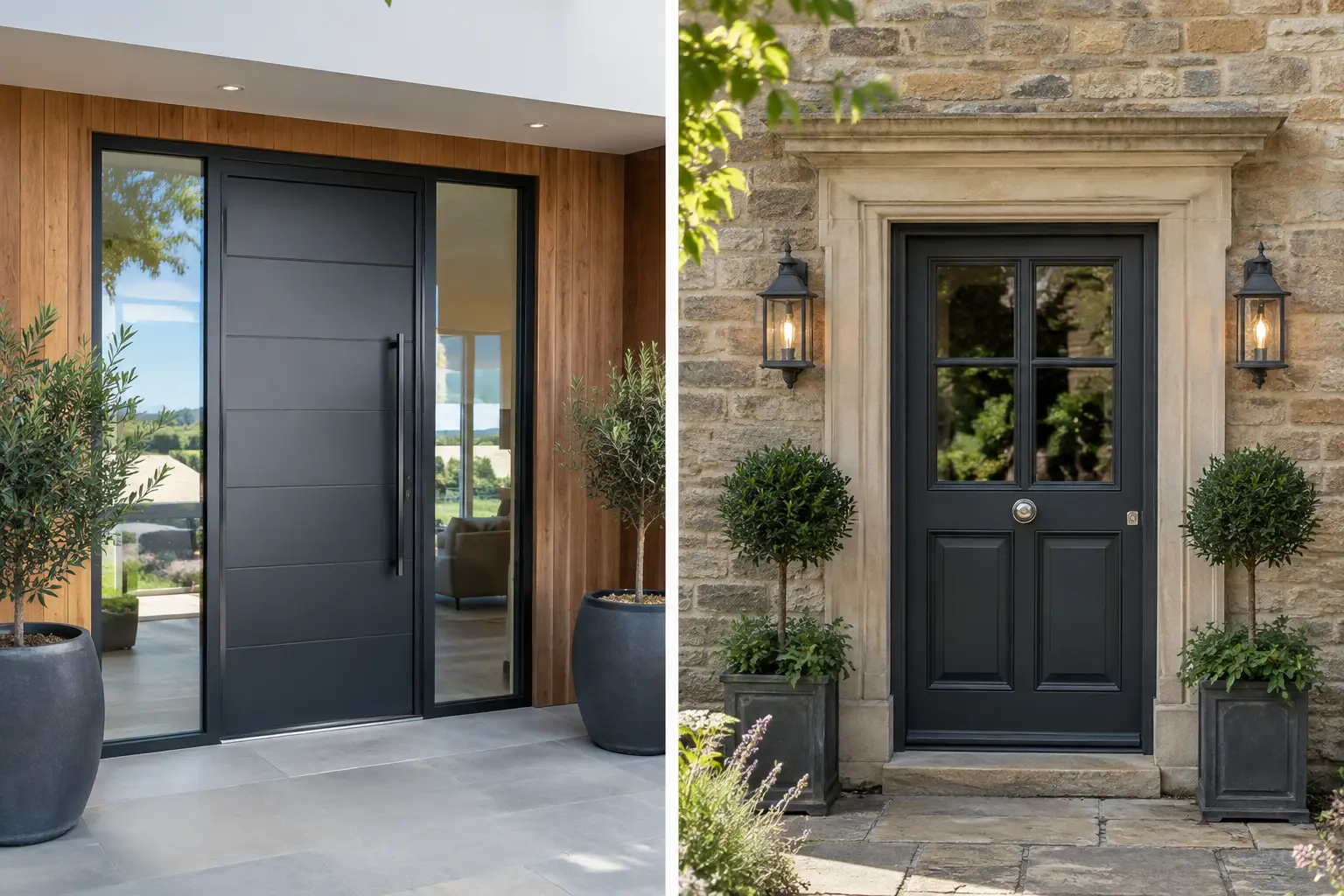
Steel doors have presence. At the front of a property, they can give a modern home a sharp, tailored appearance or create a confident contrast against traditional brickwork and rendered façades. In black, bronze, grey or a carefully chosen bespoke colour, they can become a genuine design feature rather than simply a functional entrance.
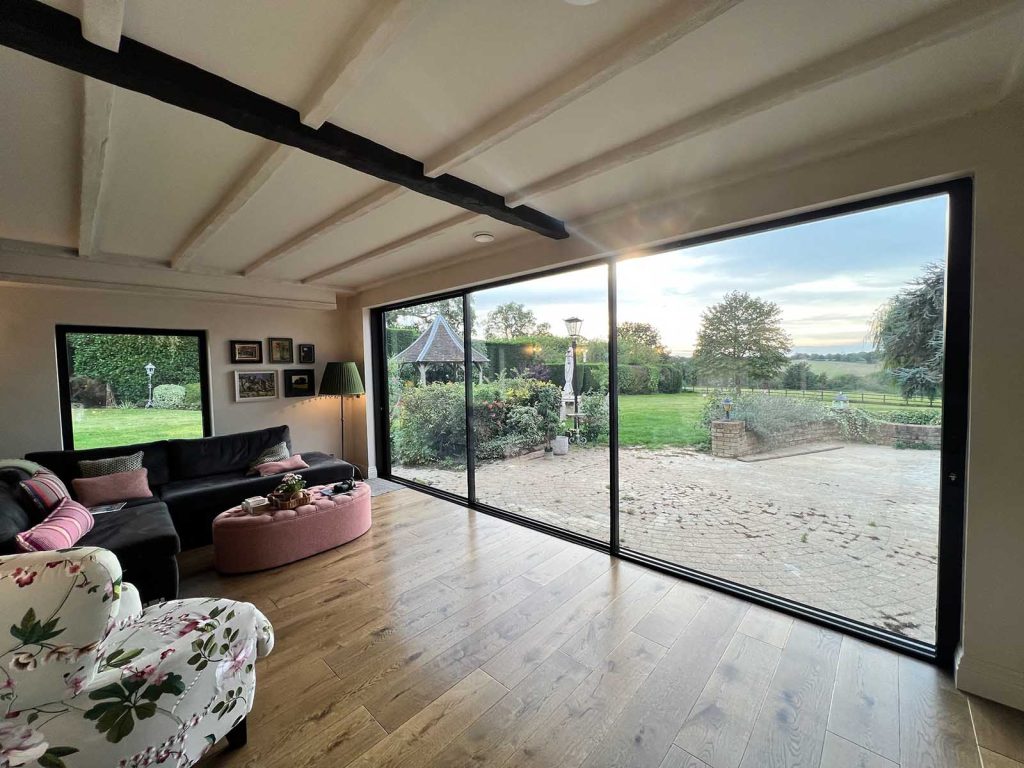
Inside the home, slim steel-framed doors and partitions are popular for separating kitchens, hallways, studies and living spaces without losing light. They help define rooms while retaining a visual connection, which can be particularly valuable in renovated Victorian and Edwardian houses where owners want better flow without creating one large open-plan area.
That said, the style is not right for every property. Fine steel sightlines can complement period detailing beautifully, but the grid layout, handle choice and colour need to be proportionate to the building. A heavily divided industrial-style door can feel out of place on a modest cottage, while a large, plain steel entrance door may overwhelm a traditional porch. Good design is often about restraint.
Durability and stability
Quality steel is stable and does not warp, swell or twist in the way that can affect some natural materials over time. With a durable protective finish and well-designed drainage and seals, it is well suited to an exposed entrance. It also copes confidently with the large panes of glass and tall openings common in modern extensions.
Maintenance is generally modest. Routine cleaning with mild soapy water, keeping drainage points clear and checking moving parts periodically will help preserve the finish and operation. Coastal properties, highly exposed sites and doors with specialist finishes may need more regular care, so it is worth discussing maintenance requirements before committing to a particular product.
Where steel doors need careful consideration
The main consideration is cost. A bespoke steel door is a premium purchase, particularly when it includes advanced locking, specialist glazing, a non-standard size or architectural finishes. It is unlikely to be the most economical way to replace a standard front door.
However, price should be assessed against expected lifespan, security, energy performance, appearance and the complexity of the opening. On a high-value renovation or new-build, the entrance is a highly visible element. Choosing a cheaper product that looks out of scale or requires earlier replacement can prove false economy.
Thermal performance also requires an informed comparison. Steel conducts heat, so modern external systems need a thermal break, insulated sections and correctly specified glazing to reduce heat transfer. A well-engineered steel entrance door can perform very well, but not every steel system is designed for external use. Ask for the actual thermal information for the complete door configuration, not a broad claim based on the material alone.
Weight is another practical factor. Steel doors are substantial, especially with large glazed panels. The opening, surrounding structure and threshold all need to be assessed properly. This is especially relevant in older homes, side-return extensions and projects where the door sits within a new structural glazing scheme.
Choosing between steel, aluminium, timber and composite
A steel door is ideal when security, a premium feel and a distinctive architectural statement are priorities. It is particularly well suited to luxury renovations, contemporary homes and entrances where the door is intended to be a focal point.
Aluminium is often the practical alternative for homeowners who want slim profiles, colour choice and good thermal performance at a potentially lower cost. It is a strong option for contemporary front doors, patio doors and large glazed openings. Timber brings warmth and character that can be difficult to replicate, making it a natural choice for heritage properties, although it requires more ongoing care. Composite doors offer a cost-effective blend of insulation, security and low maintenance, with designs that work well across many family homes.
There is no single winner. A Georgian townhouse in St Albans may suit a carefully detailed timber or heritage-style door, while a new-build in Radlett may benefit from a striking steel entrance. The best material is the one that fits the property, the budget and the way the household lives.
Questions to ask before ordering
Before choosing a steel door, ask whether the system is designed for internal or external use, what security testing applies, and how its thermal performance is measured. Confirm the glazing specification, threshold detail, locking options, finish warranty and expected lead time. It is also sensible to ask who will survey the opening, install the door and provide aftercare if adjustments are needed.
For a large entrance or a complex renovation, a site survey should consider more than measurements. The installer should look at access, the condition of the surrounding structure, floor levels, drainage, internal finishes and how the door will be used every day. Details such as the swing direction, handle height and sightline through the hallway make a real difference once the work is complete.
E&A Windows helps homeowners, architects and builders assess these details before manufacture, with no hard sales and clear advice on which solution genuinely suits the project.
Is a steel door worth it?
For the right home, a steel door can be an excellent investment. It offers strength, security and a level of visual precision that few other materials can match. Yet its value comes from a complete package: considered design, suitable thermal specification, quality hardware and installation carried out with utmost care and precision.
Rather than choosing steel simply because it is fashionable, look at the entrance as part of the whole property. A door that fits the architecture, performs reliably and feels right every time you come home is the one that will continue to earn its place for years to come.