
Tilt and Turn Window Benefits for Modern Homes
- 6 August 2026|
- News
A bedroom window left slightly open overnight can feel like a compromise: fresh air is welcome, but security and rain are real concerns. This is where the practical tilt and turn window benefits become clear. Rather than choosing between a fully open casement and a closed window, one handle gives you two useful opening positions designed for everyday living.
Tilt and turn windows are increasingly specified for replacement projects, extensions and contemporary new-builds across Hertfordshire and North London. They can suit many different property styles, particularly where homeowners want clean sightlines, reliable performance and a more flexible way to ventilate their rooms.
How tilt and turn windows work
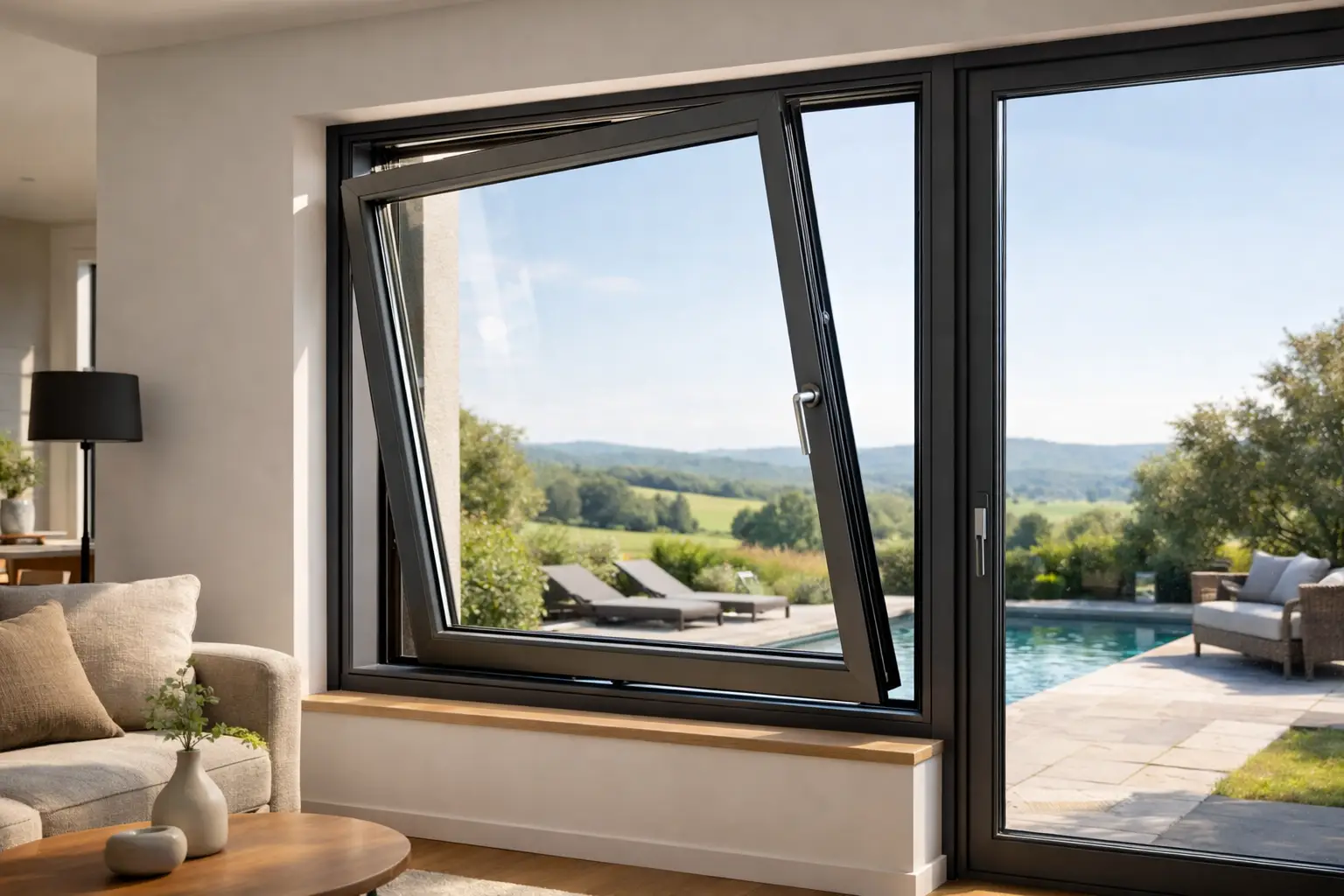
A tilt and turn window has a single sash and a multi-position handle. Turn the handle one way and the window opens inwards from the side, much like a door. Turn it another way and the top of the sash tilts into the room, creating a narrow opening along the upper edge.
The hardware is designed to make these positions distinct and secure. In the closed position, the sash seals against the frame; in the tilt position, it allows controlled airflow; and in the turn position, it offers a wide opening for cleaning, ventilation or access. The exact operation and opening angle depend on the system, window size and installation details, so this should be discussed at survey stage rather than assumed from a brochure.
The main tilt and turn window benefits
Controlled ventilation without fully opening the window
The tilt setting is often the feature homeowners value most. It lets warm, stale air escape from the top of a room while limiting the opening at low level. This can be particularly useful in bedrooms, kitchens, bathrooms and home offices, where background ventilation makes a noticeable difference to comfort.
On a mild day, opening a window fully may be ideal. On a cooler day, or when you want airflow without an open sash projecting into the room, the tilted position is more measured. It can also help when a window is above a worktop, behind furniture or in a room where space is at a premium.
No window left open should be treated as completely secure or weatherproof in every condition. However, a quality tilt and turn system gives a more controlled ventilation option than leaving a conventional window wide open. For ground-floor rooms, child safety and security requirements should always guide the final specification.
Easier cleaning from inside the property
When the window turns inwards, the external face of the glass can usually be reached from inside. This is a major advantage for first-floor and upper-floor windows, where cleaning external glass can otherwise involve ladders, specialist equipment or difficult access.
For homeowners with large window openings, this is about more than convenience. It makes regular cleaning simpler and safer, helping the glazing retain the crisp appearance that makes new windows such a visible improvement. It is also useful for landlords and property managers responsible for maintaining flats or multi-storey properties.
Strong thermal performance when correctly specified
Modern tilt and turn windows can achieve excellent insulation because the sash closes tightly against the frame around its full perimeter. Combined with high-performance double or triple glazing, thermally efficient frames and a careful installation, this can reduce draughts and help maintain more even indoor temperatures.
The window style alone does not guarantee a particular energy rating. Glass specification, frame material, seals, cavity insulation and fitting quality all matter. A poorly measured or incorrectly installed premium window will not perform as it should. That is why a detailed survey is just as valuable as selecting an attractive frame finish.
For older homes in Radlett, St Albans, Harpenden or Watford, improved thermal comfort can be one of the most immediate changes after replacing tired, draughty windows. In newer extensions, tilt and turn windows can support the high-performance building fabric expected from a well-planned renovation.
Security-focused locking and close contact seals
The inward-opening design allows the sash to close firmly into the frame, while modern multi-point locking hardware can provide secure locking points around the window. Many systems can also be specified to meet recognised security standards, subject to the product, glass and installation method.
The tilt position offers another practical advantage: it provides limited ventilation without the same wide opening created by a fully open casement. That said, security should never be based on opening style alone. Ground-floor windows, accessible first-floor openings and windows near flat roofs may need enhanced glazing, restricted opening, lockable handles or a specific security specification.
A good glazing specialist will ask where each window is located, not simply quote one handle and locking option for the entire house. The right solution for a first-floor bathroom may not be the right one for a rear ground-floor kitchen.
A clean, adaptable appearance
Tilt and turn windows are often associated with contemporary aluminium designs, but they are available in a range of materials and finishes. Slimline aluminium can suit modern extensions and architectural glazing, while carefully selected uPVC, timber or heritage-style systems may work well on more traditional homes.
Because the sash opens inwards, there is no external window leaf protruding over paths, patios or planting. Internally, the opening sash needs clear space, so it is worth considering furniture layouts, blinds and radiators early in the design process. In a compact room, this can be a deciding factor.
When tilt and turn windows are the right choice
Tilt and turn windows work especially well for upper-storey bedrooms, bathrooms, loft conversions and rooms with difficult external access. They are also a strong option for homeowners who want the convenience of internal cleaning or controlled night-time ventilation.
They can be particularly effective as part of a whole-house window replacement, where consistent sightlines, handle finishes and opening functions create a coordinated result. On extensions, they can sit alongside fixed picture windows, rooflights, sliding doors or bifolds to bring light and ventilation into different areas of the layout.
For architects and builders, the style offers useful flexibility. Fixed glazing can frame a view, while adjacent tilt and turn sections provide the ventilation and cleaning access the design needs. The arrangement must be considered carefully so that opening sashes do not interrupt key elevations or clash with balcony rails, external shading or internal joinery.
Points to consider before choosing them
Tilt and turn windows are not automatically the best option for every opening. Their inward swing requires room inside, which can be inconvenient behind a kitchen sink, near a desk or in a narrow hallway. A side-hung casement, top-hung window or fixed pane may be more suitable in those locations.
The hardware is also more complex than that of a simple casement window. Quality components, correct adjustment and professional installation are essential for smooth operation over time. The window should feel controlled and solid, not stiff, loose or difficult to lock. Periodic cleaning of the frame and sensible maintenance of moving parts will help preserve performance.
Planning considerations may also affect the choice. In conservation areas, listed buildings or period properties, window proportions, glazing bars, frame depths and external appearance are often more significant than the opening mechanism. A sympathetic timber or heritage aluminium solution may be required, and consent may be needed before work begins.
Finally, think about how each room is used. The best window scheme rarely uses one style everywhere. A living room with a wide garden view may benefit from fixed or casement glazing, while an upstairs bathroom may be better served by a tilt and turn configuration. Bespoke advice should start with the property and its practical needs, rather than a one-size-fits-all product choice.
Choosing the right specification for your home
Frame material, glass, colour, handle finish and opening configuration should work together. Aluminium offers slim profiles and a contemporary feel, while uPVC can provide a cost-effective, low-maintenance option. Timber brings natural character, and some heritage aluminium systems are designed to replicate the proportions of traditional steel windows while offering modern performance.
Glass selection deserves equal attention. Obscure glazing can improve privacy in bathrooms and overlooked spaces; solar-control glass may help in large south- or west-facing elevations; and acoustic glazing can be worthwhile near busy roads. Safety glass may be required in certain locations, including low-level glazing and doors.
At E&A Windows, the process begins with understanding how you use the space, followed by a measured survey and clear recommendations. This helps ensure the final windows look right, operate properly and deliver the comfort, security and finish you expect for years to come.
A well-chosen tilt and turn window is not simply a clever mechanism. It is a practical part of a home that makes fresh air, cleaning and everyday comfort easier, while respecting the character and layout of the property.